
Zhangzhou itself has a genuine old town worth an afternoon, but most “things to do in Zhangzhou” lists (including an earlier version of this one) pad their numbers with attractions that are actually in Xiamen, Longyan, Chaozhou, or Quanzhou – cities that sit anywhere from 30 minutes to nearly two hours away. We rebuilt this guide around that reality: six sights that are genuinely inside Zhangzhou city, followed by the real day trips worth the train or bus ride, each labeled with how far it actually is.
Fujian province uses the yuan (¥/CNY); expect mild subtropical weather with summer highs near 32°C (90°F) and mild winters around 12°C (54°F).
| Pick | Where | Best for |
|---|---|---|
| Zhangzhou Confucian Temple & Old Town | Zhangzhou city (Xiangcheng District) | History without leaving town |
| Tianluokeng Tulou Cluster | Nanjing County, Zhangzhou prefecture (~1.5-2 hr) | UNESCO earthen roundhouses |
| Gulangyu Island | Xiamen (~30 min by high-speed rail) | Car-free island of colonial villas |
| South Putuo Temple | Xiamen (~30 min) | Active Buddhist temple, free entry |
| Guangji Bridge | Chaozhou, Guangdong (~1 hr 40 min) | A bridge that is also a floating pontoon |
Best Things to Do in Zhangzhou Itself
These six are inside Zhangzhou city proper – no train ticket required.
3. Confucian Shrine of Zhangzhou (Zhangzhou Confucian Temple)

Zhangzhou’s Confucian Temple, in the heart of the old town in Xiangcheng District, dates to 1139 during the Song Dynasty, making it one of the oldest continuously maintained Confucian temples in Fujian. It anchors the wider Old Town of Zhangzhou, a historic block that won a UNESCO Asia-Pacific Award for Cultural Heritage Conservation in 2004. Address: GJ7W+9WJ, Xiangcheng District, Zhangzhou, Fujian, China, 363099.
8. Nanshan Temple
Nanshan Temple traces back to 736 CE in the Tang Dynasty, making it one of the oldest working Buddhist temples in the Zhangzhou area, on the Xiangcheng-Longhai border near the Jiulong River. Admission is a token ¥10. (Earlier drafts of this list named a “Mt. Jiuhua Shingon Temple” here – that place does not exist near Zhangzhou; Mount Jiuhua is a real Buddhist mountain, but it is in Anhui province, more than 1,000 km away, and its temples follow Chinese Buddhism, not the Japanese Shingon school.)
9. Zhangzhou Ancient City Memorial House
A small museum inside the old town at 56 Yan’an S Rd, Xiangcheng District, preserving photographs, artifacts, and neighborhood history from old Zhangzhou – a quiet stop after the Confucian Temple.
22. Zhangzhou Ancient City (Old Town)
Beyond the temple itself, the surrounding Old Town blocks preserve Tang- and Song-era street patterns, ancestral halls, and stone memorial archways. The district is recognized for seven forms of nationally listed intangible cultural heritage, including glove puppetry, Gezai opera, and woodblock New Year paintings, some of which are performed for visitors on the old streets. Free to walk.
23. Zhangzhou Ancient City Memorial House (same site as #9)
This is the same Ancient City Memorial House listed as #9 above – see that entry for the address and details.
27. Zhangzhou Countryside Park
A riverside greenway along the Jiuulong River in Xiangcheng District (Jiangbin Rd), good for an easy walk or bike along the water without leaving the city. Free entry, best in the early evening when locals come out to exercise.
31. Yundong Rock (Cloud Cave Rock)
Yundong Rock, in Zhangpu County within the Zhangzhou urban area, is the only 4A-rated national scenic spot inside Zhangzhou’s own city limits. The Song Dynasty philosopher Zhu Xi is said to have praised the site during his time in Fujian. (Earlier drafts of this list called this slot “Zhangzhou’s Techno-Arcadia” – that name does not match any attraction we could verify, so we replaced it with this real, well-documented site in the same county.)
Best Day Trips from Zhangzhou
The remaining 33 slots on this list are real attractions, but they are not in Zhangzhou – they are spread across four nearby cities. We kept every original numbered slot (per our house rule against deleting numbered items), grouped them by destination, and disclosed duplicates rather than repeating full write-ups.
Tulou Country (Nanjing County & Yongding, roughly 1.5-2 hours by car)
1. Tianluokeng Tulou Cluster

Tianluokeng, in Shuyang, Nanjing County (still within Zhangzhou prefecture), is the famous “four dishes and one soup” cluster of five earthen roundhouses and part of the UNESCO World Heritage-listed Fujian Tulou. A combination ticket covering Tianluokeng, the nearby Yuchang Building, and Taxia Village runs roughly ¥90-100.
2. Chuxi Tulou Cluster

Chuxi is in Yongding District, Longyan – a different prefecture from Zhangzhou, about 106 km and roughly 1 hour 45 minutes by car. It is one of the largest tulou clusters in the region, sometimes called an open-air museum of roundhouse architecture.
4. Chengqilou

Also in Yongding, near the Hongkeng and Gaobei clusters, Chengqilou is the largest circular tulou on record – four concentric rings and more than 400 rooms, earning it the nickname “king of tulou.”
Xiamen (about 42 km, roughly 30 minutes by high-speed rail)
5. Hi Heaven, Gulangyu’s Grandest Villa
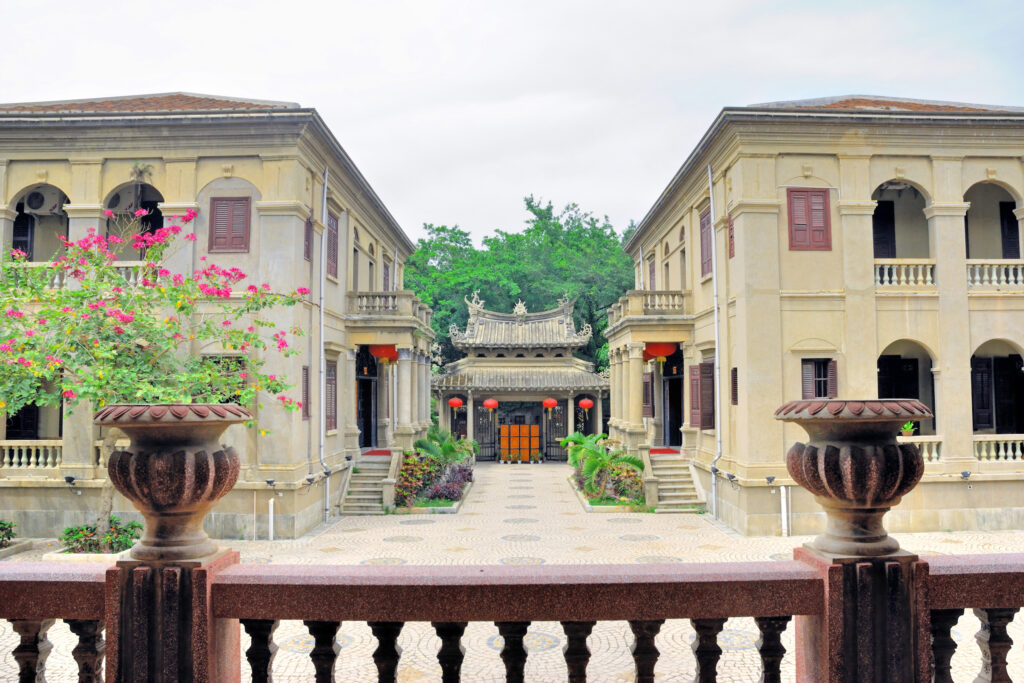
Built in 1921, Hi Heaven is the largest historic villa on car-free Gulangyu Island, blending Chinese and Western architectural styles. Three of its five buildings are open to visitors, including a cultural-heritage performance space and a small art gallery.
6. Hulishan Cannon Fort
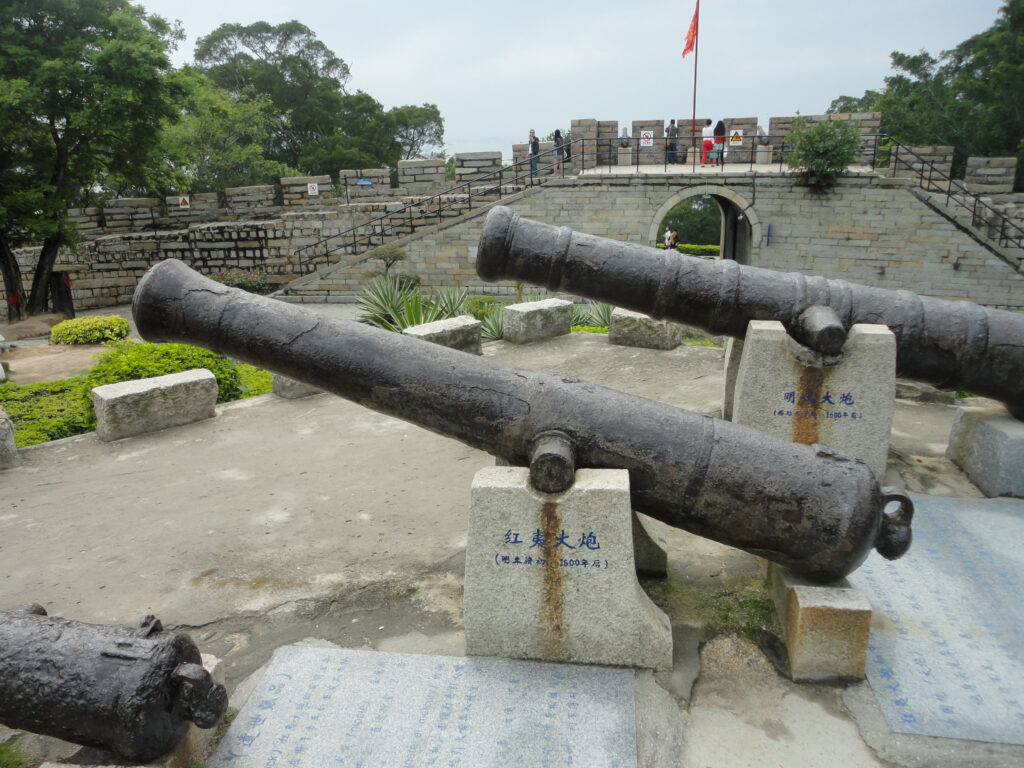
Built between 1894 and 1896, this Qing Dynasty coastal battery still holds a 280mm Krupp gun bought from Germany in 1893, one of the largest coastal-defense cannons still in its original position. Adult admission is about ¥25, open 8:00 AM to 6:00 PM.
7. Zheng Chenggong (Koxinga) Memorial Hall

On Gulangyu’s Riguang Rock, inside the historic Xilin Villa, this memorial (opened 1962) tells the story of Ming-loyalist general Zheng Chenggong, who drove Dutch colonial forces out of Taiwan in 1662 and is still honored today as a national hero.
21. Zheng Chenggong Memorial Hall (same site as #7)
Duplicate of #7 above – see that entry.
10. Haoyueyuan
A preserved colonial-era residence on Gulangyu’s Zhangzhou Road, part of the island’s walking circuit of historic villas near the piano and organ museums.
24. Haoyueyuan (same site as #10)
Duplicate of #10 above – see that entry.
11. South Putuo Temple
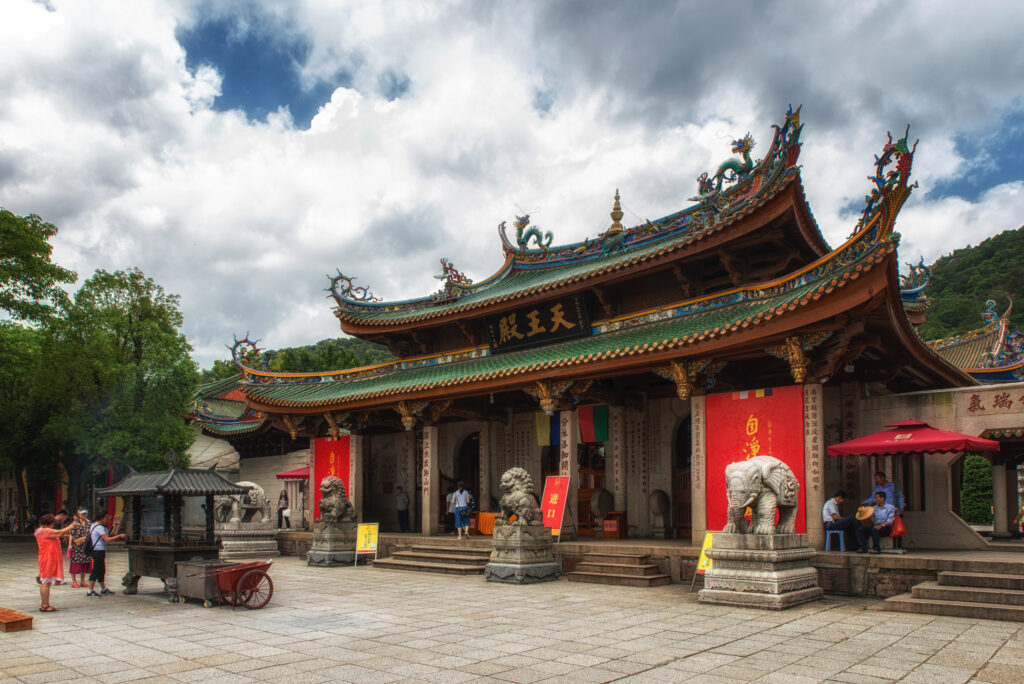
South Putuo Temple’s roots reach back to the Tang Dynasty (618-907 CE); its present form dates to a Qing Dynasty rebuild under the Kangxi Emperor around 1684. It has been free to enter since April 2011, open 8:00 AM to 8:00 PM, and remains an active temple with over 200 resident monks, right next to Xiamen University.
25. South Putuo Temple (same site as #11)
Duplicate of #11 above – see that entry.
12. Yuyuan Garden, Gulangyu
A classical garden on Gulangyu near Fuxing Road, a quieter stop on the island away from the main ferry-pier crowds.
26. Yuyuan Garden (same site as #12)
Duplicate of #12 above – see that entry.
14. Qinyuan, North Gate
Another preserved Gulangyu villa, on the island’s historic-residence walking route near Anhai Road.
29. Qinyuan, North Gate (same site as #14)
Duplicate of #14 above – see that entry.
15. Yanwu Bridge
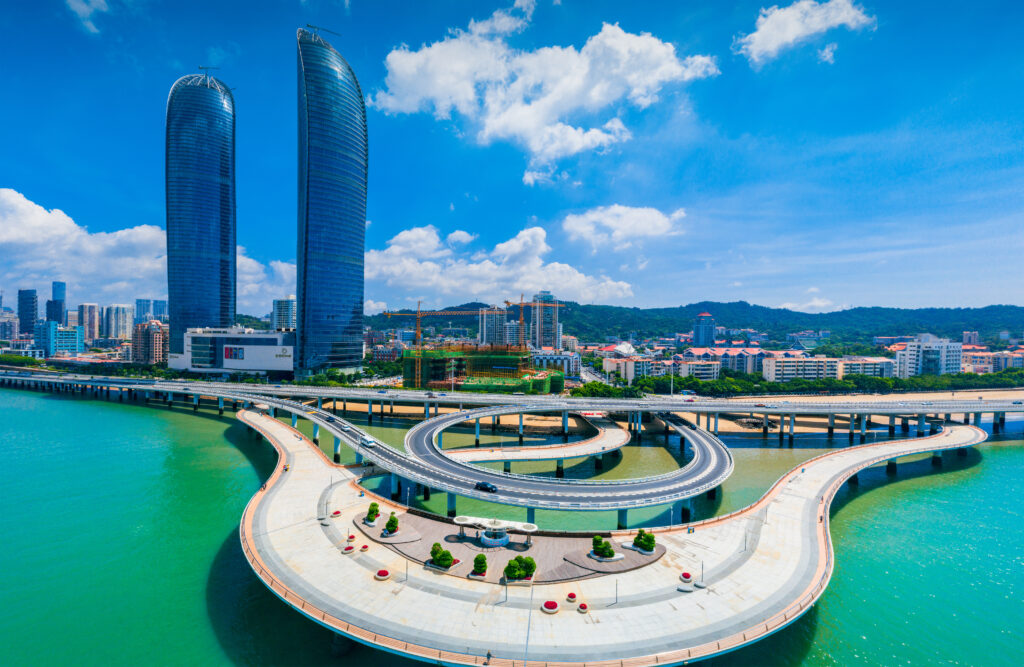
A scenic pedestrian and road bridge along Xiamen island’s coastal ring road, popular at sunset for views back toward the city’s twin towers and the strait.
30. Yanwu Bridge (same site as #15)
Duplicate of #15 above – see that entry.
16. Xiamen Railway Culture Park

Built along a decommissioned rail corridor on Huyuan Road, this park preserves old locomotives and rail-era buildings as a walkable heritage site. Note: earlier versions of this list titled this entry “Zhangzhou’s Railways,” but the park itself is in Xiamen.
32. Railway Culture Park (same site as #16)
Duplicate of #16 above – see that entry.
17. Overseas Chinese Museum
At 493 Siming S Road in Xiamen, this was China’s first museum dedicated to the overseas Chinese diaspora, tracing Fujian emigration to Southeast Asia and beyond.
33. Overseas Chinese Museum (same site as #17)
Duplicate of #17 above – see that entry.
19. Gulangyu Piano Museum

Gulangyu is nicknamed “Piano Island” for having the highest concentration of pianos per capita in China. Its Piano Museum, inside a restored colonial villa, houses a collection of antique pianos (the museum has also displayed organs, which is why some listings call it the organ museum).
35. Gulangyu Piano Museum (same site as #19)
Duplicate of #19 above – see that entry.
20. Xiamen’s Coastal Ring Road (Huandao Road)

The scenic coastal road along Xiamen island’s southern shore is popular for cycling and jogging, with sea views toward Gulangyu.
36. Xiamen’s Coastal Ring Road (same site as #20)
Duplicate of #20 above – see that entry.
37. Union Church, Gulangyu
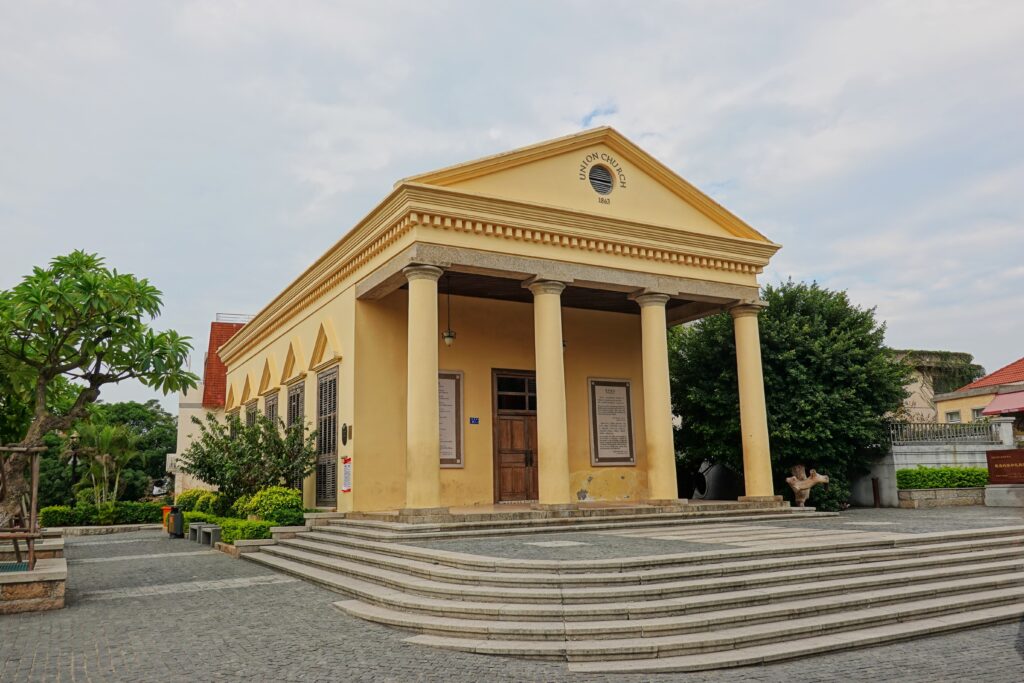
A late-19th-century Protestant church built by Gulangyu’s foreign community, one of the island’s oldest Western-style buildings and now a heritage landmark rather than an active parish for most visitors.
38. Xiamen Piano Museum, Gulangyu

Located a short walk from the piano museum at #19, this appears to be the same collection or a sister site under a slightly different name (Gulangyu vs. Xiamen Piano Museum) – both sit within the same small stretch of the island and cover the same piano-collection theme.
Chaozhou, Guangdong (about 195 km, roughly 1 hour 40 minutes by train)
13. Guangji Bridge (Xiangzi Bridge)

Guangji Bridge, over the Han River in Chaozhou, dates to the Song Dynasty (12th century) and is famous as the only bridge in China combining a beam bridge, a floating pontoon bridge, and an arch bridge in one structure – the middle pontoon section still opens for river traffic. Note this is in Guangdong province, not Fujian, so it is a longer trip than the Xiamen or Quanzhou options on this list.
28. Guangji Bridge (same site as #13)
Duplicate of #13 above – see that entry.
39. Guangjimen City Tower

The old east gate tower of Chaozhou’s Ming-Qing city wall, right next to Guangji Bridge, with a lookout over the bridge and the Han River. Easily paired with #13 on the same trip.
Quanzhou (about 135 km, roughly 37 minutes by high-speed rail)
18. Donghu Park

A large lakeside city park in Fengze District, Quanzhou, popular with locals for boating and evening walks – a relaxed half-day stop rather than a headline attraction.
34. Donghu Park (same site as #18)
Duplicate of #18 above – see that entry.
40. Quanzhou Amusement Park

A municipal amusement park in Licheng District, Quanzhou – worth adding to the day only if you are already spending a full day in Quanzhou with kids.
Frequently Asked Questions
Is Xiamen part of Zhangzhou?
No. Xiamen and Zhangzhou are separate prefecture-level cities in Fujian province, though they sit only about 42 km apart and are connected by a roughly 30-minute high-speed train, which is why so many “Zhangzhou” attraction lists (including earlier versions of this one) mix in Xiamen sights.
What can I actually see in Zhangzhou city itself?
The Confucian Temple and surrounding Old Town, the Ancient City Memorial House, Zhangzhou Countryside Park along the Jiulong River, Nanshan Temple, and Yundong Rock in Zhangpu County – all covered above under “Best Things to Do in Zhangzhou Itself.”
How far are the Fujian Tulou (earthen roundhouses) from Zhangzhou?
Tianluokeng, in Nanjing County, is technically within Zhangzhou prefecture and is the closest cluster. The larger Chuxi and Chengqilou clusters are in Yongding, Longyan – about 106 km and roughly 1 hour 45 minutes by car.
What currency is used in Zhangzhou, and roughly how much should I budget?
Fujian province uses the Chinese yuan (¥/CNY). Most temple and park admissions on this list run free to about ¥25 (roughly $3.50 USD), and the Tianluokeng combination ticket runs about ¥90-100 (roughly $12-14 USD).
This guide was reviewed and updated on 2026-08-16 to correct attractions that were misattributed to the wrong city and to remove content we could not independently verify.
Leave a Reply