Blog

  • Lying About Number of Guests in Hotel Room: Consequences and Penalties

    Lying About Number of Guests in Hotel Room: Consequences and Penalties

    When you don’t tell the truth about the number of guests in your hotel room, it can lead to trouble. It’s likely the hotel has rules about this, and breaking them could mean you have to pay more money or even face legal trouble. But just as importantly, it’s not being honest. Sometimes, people forget that it’s better just to follow the rules from the start. So next time when making room booking, it simply makes sense to be truthful about your numbers.

    Lying about the number of guests in a hotel room can have serious repercussions, including additional fees, eviction without refund, or even legal penalties. It’s always best to book a room that accommodates the actual number of guests and to adhere to the hotel’s policies to ensure a pleasant and lawful stay.

    lying about number of guests in hotel room

    Lying About Number Of Guests in a Hotel Room: An Overview

    Lying about the number of guests staying in a hotel room is a common occurrence, but it’s not without its consequences. When you book a hotel room for two people but plan to have four people stay, it might seem harmless at first. However, hotels have strict policies regarding guest numbers for several important reasons.

    For instance, hotels are concerned about safety and guest experience. They ensure they know exactly who’s on their property and how many people are in each room for emergency and security reasons. Additionally, they base their services and amenities on the number of registered guests, such as complementary breakfasts, extra towels, and bedding.

    Honesty is another crucial factor to consider when debating whether or not to lie about the number of guests. The front desk staff relies on truthful information to assign appropriate accommodations and manage available resources effectively.

    It may seem harmless to sneak extra guests into the free breakfast provided by the hotel, but this act presents ethical considerations. It’s frowned upon and can be seen as dishonest to take advantage of complementary services for individuals who were not intended to receive them.

    Now, let’s delve into specific risks associated with misrepresenting the number of occupants in a hotel room.

    Hotel Policies Regarding Occupant Numbers

    When booking a hotel room, it’s crucial to understand that there are occupancy limits set for each room. This is more than just a formality; it’s about safety, comfort, and legal compliance, which is why these limits are established based on factors such as the room size, fire regulations, and overall guest experience.

    First and foremost, these limits are put in place for the safety of guests. An overcrowded room during an emergency or evacuation could pose a serious risk. Exceeding the maximum occupancy could also violate fire codes, making it a serious legal matter. It’s not just about comfort or convenience; it’s about ensuring a safe environment for everyone staying at the hotel.

    Moreover, each hotel has its specific policy regarding maximum occupancy, so it’s crucial to familiarize yourself with these rules before booking and checking in. Most hotels make this information clear during the booking process or provide it upon check-in. Some hotels may have different occupancy limits based on the room type or amenities provided, so be aware of these details to avoid any inconveniences during your stay.

    Exceeding the maximum occupancy can lead to additional charges or even eviction from the premises, as hotels enforce these policies to ensure that all guests have a comfortable and safe experience during their stay. By adhering to these guidelines, you contribute to maintaining a pleasant and secure environment for all guests.

    In essence, understanding and adhering to the hotel’s policies regarding occupant numbers is essential for ensuring a safe, comfortable, and enjoyable stay. It’s not just about rules; it’s about creating an environment where everyone can relax and feel secure during their time at the hotel.

    Moving forward from the implications of misreporting occupant numbers, let’s examine the real-world consequences of inaccurately representing the number of guests in your hotel room.

    Consequences of Misreporting Guest Count

    Misrepresenting the number of guests staying in a hotel room can lead to an array of unwelcome outcomes. Let’s take a closer look at these potential scenarios and why it’s crucial to adhere to the specified occupancy limits.

    Additional Fees

    When you conceal the actual number of guests in your room, you run the risk of facing additional fees. Hotels are likely to charge extra for undeclared guests to compensate for the added services and amenities they use. These fees can quickly add up and end up significantly increasing your overall expenses for the stay, turning what was meant to be a budget-friendly trip into a financially burdensome affair. These charges are not just inconsequential fines; they could truly impact your travel budget.

    Furthermore, by not accurately reporting the number of guests, you are essentially taking advantage of the hotel’s facilities without paying for them, which can be viewed as unfair and unethical. This practice ultimately affects other guests who follow the rules, disrupting the hotel’s ability to provide fair and equal service to all its patrons.

    Unwelcome Attention

    The repercussions of misreporting guest count extend beyond financial penalties. Once caught, you may receive unwanted attention from hotel staff or even other guests. This can lead to feelings of discomfort and embarrassment, potentially putting a damper on your entire trip.

    On top of that, being labeled as an untruthful guest could tarnish your relationship with the hotel. This may result in a loss of trust and make future interactions with hotel staff uncomfortable or strained. It’s crucial to maintain a respectful and honest rapport with the hotel personnel for a pleasant and enjoyable stay.

    Disruption of Reservations

    Perhaps one of the most severe consequences is the potential disruption of your reservations. If the actual number of occupants in your room surpasses the stipulated limit, hotels may exercise their right to ask you to leave without offering any refund. This unexpected eviction not only disrupts your travel plans but also leaves you scrambling to find alternative accommodations at short notice. It’s a scenario that can quickly turn an anticipated holiday or business trip into a logistical nightmare.

    Now that we understand the implications of misrepresenting the number of guests in our hotel rooms, it’s important to delve into another critical aspect—understanding penalty fees imposed by hotels.

    See Related: 10 Best Hotels in Louisville: Your Guide to Luxurious Stays

    Understanding Penalty Fees Imposed by Hotels

    Hotels work hard to create a comfortable and secure environment for their guests. When booking a hotel room, guests are often asked about the number of occupants to ensure everyone’s safety. However, misreporting or underreporting the number of guests can lead to a breach in trust and additional expenses for both the hotel and the misreporting guest.

    Penalty fees for misreporting the number of guests can vary widely from one hotel to another. Some hotels may charge an extra fee per undisclosed occupant per night, while others may impose a penalty as a percentage of the room’s nightly rate per undisclosed occupant. This means that unintentionally or intentionally misreporting the number of guests can lead to a significant increase in the cost of your stay.

    For instance, if the standard room rate is $200 per night and the hotel charges 25% of the room’s nightly rate for each undisclosed occupant, having one extra guest in the room could mean an additional $50 charge for each night of the stay—quickly impacting your overall expenses.

    Let’s consider a family booking a hotel room for two adults and a child but failing to report that their teenager will also be staying in the room. If the hotel imposes a fee of $50 per night for an additional undisclosed occupant, and if they stay for five nights, they would end up paying an extra $250 without realizing it—highlighting how concealing information about the number of guests can result in unexpected expenses during your hotel stay.

    It’s important to note that these penalty fees not only affect the guest financially but also have operational implications for the hotel. Additional guests mean increased demand on resources such as water, electricity, toiletries, linens, and more, impacting the overall cost of providing service.

    These fees are outlined in the terms and conditions provided by hotels during booking or check-in procedures. Therefore, it is crucial to carefully review these terms to avoid any surprises related to penalty fees at the end of your stay.

    Understanding these penalty fees provides insight into how they directly tie into hotel operations and affect guests’ travel expenses. The next section will explore key tips on avoiding such penalties and ensuring a smooth stay at any hotel.

    Legal Implications of Lying to Hotels

    When you make a reservation with a hotel, you’re entering into a contract with them. This contract typically includes specific terms and conditions that both parties are expected to adhere to. Misrepresenting the number of guests violates this agreement and can lead to legal issues.

    If you book a room for two people but actually bring in more than what was agreed upon without informing the hotel, you are effectively breaching the terms and conditions of your reservation. This breach of contract could give the hotel grounds to take legal action. While it might sound extreme, it’s crucial to understand that hotels have these policies in place to ensure the safety and comfort of all their guests. By violating these policies, guests risk not only financial repercussions but also legal liabilities.

    Furthermore, hotels have the right to pursue civil penalties against guests who violate their policies. These civil remedies can result in financial liabilities for the guests. Essentially, this means that the hotel can take legal action to recover any additional costs incurred due to the breaches of their policies.

    For instance, if an unregistered guest causes damage to the hotel property or disrupts the peace and comfort of other guests, the hotel may hold the paying guest responsible for these damages. This could lead to demanding compensation for any resulting repairs or losses.

    The legal implications of misrepresenting the number of guests go beyond simply breaking hotel rules; they extend into breaching contractual agreements and potentially facing financial and legal consequences as a result. It’s vital for guests to be aware of these potential ramifications and adhere to the hotel’s policies to avoid unnecessary disputes and liabilities.

    Understanding these legal implications puts into perspective how important it is to provide accurate information regarding the number of guests when making a reservation at a hotel. The repercussions of providing false information can lead to significant consequences, emphasizing the need for honesty and compliance with hotel policies.

    Ethical Alternatives to Avoid Extra Charges

    lying about number of guests in hotel room

    When booking a hotel room, it’s crucial to be straightforward about the number of guests who will be staying. This not only ensures compliance with hotel policies but also upholds ethical standards. If you have more guests than what the room can legally accommodate, it’s best to either book a larger room or consider alternative lodging options, such as hostels or vacation rentals, to comfortably accommodate everyone without violating occupancy limits.

    By providing accurate information about the number of guests, you’re not only being honest and responsible but also minimizing the risk of facing additional charges or penalties. It’s about respecting the rules of the establishment you’re staying at and being considerate of their policies.

    Additionally, if you find that the room you’ve booked doesn’t meet your needs in terms of capacity, don’t be afraid to discuss the situation with the hotel management. They may be able to provide suitable solutions that align with both their policies and your requirements. It’s always better to communicate openly rather than attempting to circumvent hotel regulations and potentially facing repercussions.

    It is suggested to book a room that accommodates the actual number of guests or consider staying in a hostel instead.

    Imagine this: You’ve booked a room for two people, but you plan on having additional friends join you for breakfast. However, sneaking extra guests into the complimentary breakfast provided by the hotel not only violates their policies but also raises ethical concerns. Instead, consider finding alternative breakfast options outside the hotel that can comfortably accommodate all your guests without breaching any rules.

    Ultimately, making conscientious choices when it comes to booking accommodations contributes to a positive and respectful experience for all parties involved. By adhering to the rules and regulations set forth by hotels and other lodging establishments, you prioritize integrity and cooperation while avoiding potential disputes and inconveniences.

    Being transparent about guest numbers not only upholds ethical standards but also fosters a harmonious relationship between guests and hotel establishments. Respectful adherence to policies leads to a positive experience for everyone involved.

  • Holafly vs Airalo: An In-Depth Review of International Travel SIM Card Options

    Holafly vs Airalo: An In-Depth Review of International Travel SIM Card Options

    Holafly and Airalo are popular providers of eSIM services for globetrotters. Both platforms offer extensive coverage, with Holafly covering over 160 destinations and Airalo supporting travel across more than 200 countries. Yet, while the number of countries each covers is comparable, how they handle their services within these places sets them apart. We’ll dive deeper to reveal which outperforms the other in satisfying your roaming needs as you prepare to set foot abroad.

    When choosing between Holafly and Airalo for your eSIM needs, consider coverage, pricing, customer support, and user experiences. Both providers offer convenient eSIM solutions for travelers, but it’s essential to assess your specific requirements before deciding.

    Holafly vs. Airalo: An Overview

    Holafly vs Airalo eSim

    Having a reliable eSIM can make all the difference when traveling internationally. Holafly and Airalo are leading providers that offer eSIM services to travelers seeking seamless connectivity abroad.

    What Holafly Offers

    Holafly Landing Page
    Holafly / Holafly

    Holafly boasts an impressive coverage of over 160 destinations worldwide, with a strong focus on Europe and Asia. The platform primarily caters to travelers in these regions, providing convenient access to eSIM services through their website and mobile app. This allows users to easily purchase and manage their eSIMs, minimizing the hassle associated with traditional SIM card purchases.

    Advantages of Holafly

    • Unlimited data plans for heavy internet users.
    • Ease of setup through QR code activation.
    • A refund policy of up to 6 months offers flexibility for travelers.

    Disadvantages of Holafly

    • Higher price point compared to competitors.
    • Limited plan options in certain destinations.
    • Hotspot limitations on unlimited data plans may be a drawback for some users.

    What Airalo Brings to the Table

    Airalo Landing Page
    Airalo / Airalo

    On the other hand, Airalo offers extensive global coverage, catering to over 200 destinations worldwide. With up to 15 different plan options per country, Airalo provides a level of specificity favored by travelers with diverse itineraries. Like Holafly, users can conveniently purchase and manage their eSIMs through Airalo’s user-friendly website and mobile app.

    Advantages of Airalo

    • Extensive coverage across 200+ destinations.
    • Up to 15 plan options per country, providing tailored choices for travelers.
    • Competitive pricing in regions like Asia and North America.
    • User-friendly app interface and a loyalty rewards program for frequent travelers.

    Disadvantages of Airalo

    • Variable network quality in certain areas.
    • A complex setup process involving APN configuration may pose challenges for some users.
    • Potential delays in customer support may impact user experience.

    Key Considerations When Choosing Between Holafly and Airalo

    Holafly vs  Airalo Key Considerations

    When comparing Holafly and Airalo, several key considerations come into play:

    • Pricing Preferences: Users must weigh the cost of plans against their budgetary considerations.
    • Data Needs: Travelers with varying data usage habits should choose a plan that meets their requirements.
    • Ease of Setup: The convenience of setting up an eSIM is crucial, especially for those unfamiliar with the technology.
    • Coverage: Assessing which platform offers better coverage in the intended travel destinations is indispensable.
    • Customer Support: Timely and efficient can greatly enhance the overall user experience.
    • Additional Features: Loyalty programs, added perks and ancillary services might sway travelers towards one platform.

    With this comprehensive overview in mind, let’s now venture into a detailed comparison to help you make an informed decision based on your travel needs.

    In-Depth Comparison of Holafly and Airalo

    Holafly and Airalo Comparison

    The eSIM activation process can be crucial for travelers looking to stay connected abroad. Let’s examine how Holafly and Airalo handle this process in detail.

    Holafly’s eSIM Activation Process

    How Holafly Works Instruction
    Holafly / Holafly

    Holafly makes it relatively simple to get your eSIM up and running. Here’s a breakdown of their activation process:

    1. Selecting Destination and Data Plan: Choose your destination country and

      the data plan that best fits your needs for the trip.

    2. Completing Payment and Receiving QR Code: Proceed to the payment stage, after which you’ll receive an eSIM QR code via email.

    3. Scanning QR Code to Activate eSIM: Use your smartphone’s camera to scan the QR code received to activate the eSIM on your device.

    4. Using eSIM Upon Arrival: Once activated, seamlessly use it for data connectivity as soon as you arrive at your destination.

    This straightforward process offers convenience and efficiency for travelers seeking hassle-free international connectivity options.

    Airalo’s eSIM Activation Process

    How Airalo Works Instruction
    Airalo / Airalo

    Airalo also provides an accessible method for activating its eSIMs through its app. Here’s what their process looks like:

    1. Choose Regional, Local, or Global eSIM: Airalo offers various eSIM options, including regional, local, and global plans, to cater to various travel needs.

    2. Using Their App: The activation process begins with Airalo’s app, which provides a seamless digital experience for travelers who prefer managing their connectivity through mobile applications.

    3. Selecting Data Plan and Initiation: Based on destination and duration of stay, choose the desired data plan and initiate the activation within the app itself.

    With both providers streamlining their eSIM activation processes through online platforms and digital apps, travelers are presented with user-friendly solutions that align with the modern traveler’s demand for simplicity and convenience.

    As we delve deeper into the specifics of these eSIM activation methods, it becomes clear that Holafly and Airalo have evolved to cater to the digital-savvy traveler by offering efficient and intuitive processes for accessing international connectivity.

    Coverage and Connectivity Analysis

    Hand inserting a sim card to a phone
    Pixel-Shot / Adobe Stock

    When it comes to international travel, having a reliable and wide-reaching network is crucial. Let’s examine the coverage provided by Holafly and Airalo to see which better suits your travel plans.

    Holafly Coverage

    Holafly Coverage Countries
    Holafly / Holafly

    Holafly covers more than 160 destinations across Europe, Asia, Africa, and America. They provide single-country eSIMs and a multi-country eSIM option for travelers who plan to visit multiple locations quickly. This extensive coverage ensures you can stay connected without hassle, no matter where your journey takes you.

    Airalo Coverage

    Airalo Coverage Countries
    Airalo / Airalo

    On the other hand, Airalo offers eSIM coverage in over 200 destinations globally, spanning Europe, Asia, Africa, and America. This broad coverage allows travelers to access eSIMs in various popular and off-the-beaten-path destinations, catering to various travel needs.

    While both providers offer extensive global coverage, it’s important to consider the specific destinations you’ll be visiting. For instance, if your itinerary includes multiple stops across different continents, you may find Holafly’s multi-country eSIM option particularly valuable. Conversely, if you’re primarily focused on specific regions such as Southeast Asia or Europe, Airalo’s comprehensive coverage may be more advantageous for your travel plans.

    In addition to geographical coverage, connectivity is another crucial factor to consider. The availability of stable network connections plays a pivotal role in ensuring seamless communication and access to essential online services during your travels. Whether it’s navigating unfamiliar terrain using maps or staying connected with loved ones back home, reliable connectivity is non-negotiable.

    As you evaluate the coverage and connectivity aspects offered by both Holafly and Airalo, it’s wise to align your choice with the regions you plan to visit and your specific connectivity requirements. This strategic approach will empower you to select an international travel SIM card provider that best meets the demands of your travel itinerary and communication needs.

    Navigating both providers’ distinct coverage and connectivity features equips you with the insights needed to make an informed decision tailored to your unique travel circumstances.

    Cost and Pricing Matrix

    Holafly and Airalo Pricing comparison

    Understanding the cost and pricing is crucial when choosing an international travel SIM card. Holafly and Airalo both offer a variety of plans tailored to different budgets and data usage needs. Let’s uncover the details of their pricing structures to help you make an informed decision.

    Holafly Pricing

    Holafly Pricing in Different Countries
    Holafly / Holafly

    Holafly’s pricing structure is designed to cater to various preferences and needs. Their plans range from $19 to $99, offering flexible options for travelers with different data requirements. Whether you need a small data plan for occasional use or unlimited data for constant connectivity, Holafly has a plan for you. This diverse range of options ensures that users can select a plan that aligns with their budget and usage patterns.

    Moreover, the variable pricing based on destination allows travelers to optimize their spending by choosing plans specific to the countries they visit. For instance, a traveler heading to a destination with high data charges can opt for a suitable plan without overspending. This level of customization offers convenience and cost-efficiency, enhancing the overall value of Holafly’s offerings.

    Airalo Pricing

    Airalo Pricing Plan
    Airalo / Airalo

    Similarly, Airalo boasts competitive pricing across its eSIM range, with plans typically ranging from $15 to $40. The flexibility in pricing enables travelers to find a plan that suits their budget while ensuring adequate data coverage during their trips. From light data users to those requiring substantial data allowances for work or streaming, Airalo presents varied options to accommodate diverse needs.

    Furthermore, the transparent pricing structure simplifies decision-making for travelers, allowing them to anticipate costs and make informed choices based on their specific requirements. This transparency fosters peace of mind and eliminates uncertainties related to unexpected expenses, contributing to a positive user experience.

    As we can see, Holafly and Airalo offer versatile pricing models that enable travelers to tailor their SIM card purchases according to their unique preferences and travel habits. Understanding these price points can significantly impact your decision-making process by aligning with your budget while ensuring seamless connectivity during your international travels.

    With a solid understanding of Holafly and Airalo’s cost and pricing strategies, it’s time to assess how each provider’s options compare regarding device compatibility.

    Device Compatibility Analysis

    Holafly vs Airalo Device Compatibility

    Before embarking on your international journey, ensuring your device is compatible with the eSIMs offered by both Holafly and Airalo is essential. Both companies provide eSIM cards that can be activated instantly without needing a physical SIM card. However, it’s crucial to verify if your device supports eSIM before purchasing a SIM card from either company.

    Holafly’s eSIM is compatible with many devices, including iPhones, iPads, Samsung, Google, Huawei, Oppo, Motorola, and other select PC models. This extensive compatibility offers flexibility for travelers who use different types of devices.

    For instance, iPhone or Samsung device users can confidently rely on Holafly’s eSIM compatibility for international travel. Additionally, users of Google phones or tablets and those with devices from Huawei and Motorola will also find Holafly’s eSIM suitable for their needs.

    On the other hand, Airalo’s eSIM also works with various devices, such as iPhones, iPads, select Samsung devices, Google mobiles, Huawei, Oppo, Motorola, Rakuten, Honor, Sony, Sharp, Xiaomi, and certain PCs from various manufacturers. This broad compatibility ensures that many travelers can use Airalo’s eSIM offerings.

    The extensive device compatibility provided by Holafly and Airalo enables travelers to seamlessly access their services without being hindered by device restrictions. Whether you’re an Apple enthusiast or a devoted Android user, there’s an eSIM option available to suit your specific needs.

    Considering the importance of having a compatible device for your travel SIM card, it’s evident that both Holafly and Airalo cater to various devices, ensuring convenience and ease for all travelers with different preferences and technology choices.

    Customer Satisfaction and Feedback Review

    Holafly and Airalo Customer Satisfaction

    The true measure of a company is not derived from what they say about themselves but from their customers’ feedback. Understanding the experiences of actual users who have utilized these services is crucial. Reviews can provide insight into common issues users face, the level of customer support, and overall satisfaction with the product.

    Customer service significantly influences the overall experience with a product. Users value attentive, helpful, and responsive customer service representatives who swiftly resolve issues or answer questions. Let’s investigate how users have experienced Holafly’s and Airalo’s customer service.

    Holafly’s Customer Service

    Holafly's Customer Service
    Holafly / Holafly

    On Trustpilot, Holafly boasts generally positive reviews, earning a 5-star rating from 84% of customers. Their exemplary customer service has been lauded, with representatives described as helpful, friendly, patient, and prompt in resolving issues. Customers appreciate the excellent support provided.

    Airalo’s Customer Service

    Airalo's Customer Service
    Airalo / Airalo

    Airalo’s customer support in multiple languages has garnered positive feedback from users. Instant delivery and a flexible refund policy have further bolstered its strong reputation in the eSIM market. Users shared their experiences of receiving efficient assistance in various languages, making it easy for travelers from different regions to seek help when needed.

    Feedback also sheds light on the quality of coverage these SIM card options provide.

    Holafly’s Coverage

    Holafly All Country Coverage
    Holafly / Holafly

    Holafly has received praise for its impressive coverage in countries such as Switzerland, Vietnam, and Sharm el Sheik, Egypt. This positive feedback underscores the convenience and hassle-free connectivity experienced by travelers in diverse international destinations.

    Airalo’s Coverage

    Airalo All Country Coverage
    Airalo / Airalo

    While specific details are not always available, positive reviews indicate that Airalo has delivered reliable coverage in various locations. This trend towards positive feedback on coverage emphasizes the growing reliance on eSIMs for seamless international travel connectivity.

    By delving into customer feedback and evaluating their experiences with Holafly and Airalo, we gain valuable insights into the quality of service, support, and coverage offered by these international travel SIM card providers.

    Understanding the experiences and feedback from customers can help make informed decisions when selecting an international travel SIM card option.

  • 15 Best Cities to Visit in Morocco

    15 Best Cities to Visit in Morocco

    Enveloped by the sparkling Mediterranean and the expansive Sahara, Morocco’s allure transcends time, beckoning travelers with its kaleidoscopic landscapes and storied streets.

    Its position as a pivotal crossroads for African trade has imprinted a rich mosaic of cultures, mingling indigenous Berber traditions with vestiges of colonial French and Spanish. This tapestry of influences manifests in a spectrum of urban experiences, from the dizzying energy of global metropolises to the echoing chants of centuries-old medinas.

    (more…)
  • The Inside Scoop: How SAS Airlines Keeps Their Fares So Inexpensive

    The Inside Scoop: How SAS Airlines Keeps Their Fares So Inexpensive

    SAS Airlines keeps ticket prices low through keen operation methods and thought-out pricing strategies. They use cost-saving actions like effective route planning, managing their fleet well, and using less fuel, which cuts operational costs. Notably, they have modern planes that use less fuel, which is a big saver. Another smart move they make is changing ticket prices based on demand and market situations, allowing them to balance their income while providing affordable tickets. Surely, their knack for obtaining strategic partnerships with other airlines and travel agencies extends their reach and offers different fare options. This is how your flight to Scandinavia might cost less than expected.

    SAS Airlines may offer competitive pricing due to various factors such as operational efficiency, targeted discounts for specific customer demographics, and potential marketing strategies to attract more passengers. While their affordability can be appealing, it’s essential to consider that lower costs could also reflect specific limitations in services or offerings.

    why is sas airlines so cheap

    SAS Airline: Operational Efficiency

    SAS Scandinavian Airlines Airbus A320-232 landed on Prague, Czech Republic airport
    kamilpetran – stock.adobe.com

    One significant reason for SAS Airlines’ consistently low fares is their strategic approach to operational efficiency. They’ve honed in on several key methods to optimize their operations and cost structure, ultimately translating those savings into affordable ticket prices for their customers.

    One such initiative involves efficient route planning. By carefully designing flight paths, SAS Airlines can minimize fuel consumption and total flight time. This sharpens their competitive edge by lowering operational costs while ensuring timely and reliable service for passengers. Plus, with shorter flight times, they can often operate more flights within a given period, maximizing aircraft utilization and cost-effectiveness.

    Additionally, SAS Airlines strongly emphasizes fleet management. This means opting for modern, fuel-efficient aircraft in its fleet. Investing in these types of planes can significantly lower operating expenses. These aircraft are designed for maximum fuel efficiency, aligning perfectly with the airline’s commitment to sustainable practices and cost-effective operations.

    For example, the Airbus A320neo and A350 models are known for their fuel-saving capabilities. By leveraging such modern technology in its fleet, SAS Airlines not only reduces its environmental footprint but also saves on fuel costs—a benefit ultimately reflected in its fare prices.

    It’s remarkable how meticulous attention to every detail of their operations results in substantial long-term cost savings and ever-competitive customer fares.

    In essence, SAS Airlines’ focus on efficient route planning, modern fleet management, and sustainable fuel-saving initiatives positions them as a leader in operational efficiency within the aviation industry. Through these paramount measures, they continue to deliver budget-friendly fares without sacrificing quality or reliability for their passengers.

    Affordability of SAS: Pricing Strategy

    SAS Scandinavian Airlines commercial passenger plane flying in the sky
    Jon Anders Wiken – stock.adobe.com

    SAS Airlines is remarkable for offering competitive fares without compromising quality. Let’s examine how it maintains such affordability.

    Dynamic Pricing

    SAS Scandinavian Airlines Website landing page
    Scandinavian Airlines / Scandinavian Airlines

    Dynamic pricing is a key component of SAS’s strategy. This approach involves adjusting fares in real time based on various factors such as demand, time until departure, and the customer’s browsing history. By doing so, SAS can offer lower fares during off-peak times and adjust prices in response to market conditions. It’s a bit like how concert tickets can be cheaper if you buy them early or if the event isn’t selling out.

    Dynamic pricing allows SAS to maximize revenue while providing customers with cost-effective options, making it a win-win situation for the airline and its passengers.

    Yield Management

    Planes of the the SAS Scandinavian Airline at Newark Liberty International Airport in New Jersey
    eqroy – stock.adobe.com

    Yield management is another vital aspect of SAS’s pricing strategy. This technique involves analyzing booking patterns, customer segments, and historical data to optimize the allocation of available seats and fares. For instance, SAS may introduce lower-priced tickets for flights that historically have lower demand while increasing prices for popular routes or busy travel periods. This ensures that SAS can fill as many seats as possible at varying prices, maximizing revenue without alienating potential customers with high fares.

    By employing yield management strategies, SAS can effectively balance supply and demand, making travel more accessible to a broader range of customers without sacrificing profitability.

    Strategic Partnerships

    SAS Scandinavian Airlines Partners web page
    Scandinavian Airlines / Scandinavian Airlines

    In addition to dynamic pricing and yield management, strategic partnerships are crucial in SAS’s overall affordability. Collaborating with other airlines and travel agencies enables SAS to expand its reach and offer diverse fare options to customers. By integrating their networks with partner airlines, SAS can provide customers access to a wider range of destinations and flight schedules. These partnerships often result in code-sharing agreements and joint ventures, further enhancing the affordability and availability of flight options for travelers.

    The combination of dynamic pricing, yield management, and strategic partnerships underscores SAS’s commitment to offering affordable fares while ensuring optimal revenue generation. This balanced approach underscores the airline’s ability to cater to diverse customer needs while maintaining operational success.

    Efficiency Through Passenger Volume

    why is sas airlines so cheap

    SAS Airlines has a knack for keeping its planes full, and that’s not just good for its bottom line. Having more passengers onboard means the cost of running each flight can be spread out over more people. This also helps it reduce the average cost per passenger, leading to lower fares for travelers.

    Imagine the savings when they’re using their resources more effectively! By flying with a packed plane, they make better use of fuel, crew, and other operational costs. When you fill a plane with passengers, the cost of flying each person decreases. It’s like carpooling but on a much larger scale.

    Efficient operations help here, too. Quick turnarounds at airports, precise scheduling, and careful resource management ensure that every plane is flying as often as possible, ensuring that there’s little downtime that isn’t earning money. When airlines can fully use their aircraft, it drives down the costs per seat—and ultimately, those savings can be passed onto passengers in the form of attractively priced tickets.

    Think of it as an efficient dance—planes come in, get cleaned, and restocked quickly and efficiently before heading back out again. You can’t underestimate the power of an airplane that’s always in motion!

    Consider how airlines manage peak times like holidays or weekends when everybody wants to fly at once. Managing high volumes during these times means that they’re using their resources efficiently.

    And we’ve seen it in action! Have you ever been on a flight where, as soon as passengers are off, a team swoops into service and restock the plane so it can take off again? That’s what we mean by efficiency.

    By maximizing aircraft utilization through strategic scheduling and swift airport turnarounds, SAS Airlines ensures the most value out of every flight while passing along the benefits to its passengers through affordable fares and reliable service.

    Now, let’s delve into concerns about service quality reported by SAS Airlines passengers.

    SAS Airline Service Quality Concerns

    SAS Scandinavian Airlines plane at the airport on air
    frank – stock.adobe.com

    Low fares are undeniably a major deciding factor for many airline passengers. However, it’s also crucial to consider what level of service you’ll receive in exchange for those savings. While SAS Airlines is renowned for its competitive pricing, some passengers have expressed concerns about the trade-off between affordability and service quality, particularly regarding occasional flight cancellations, limited in-flight amenities, and mixed reviews on customer service.

    Flight Cancellations and Communication

    Close-up of an information board showing delayed and cancelled flights
    adrian_ilie825 / Adobe Stock

    Flight cancellations can be highly disruptive and frustrating for passengers, especially if they lead to missed connections or important events. While every airline experiences cancellations from time to time due to unexpected circumstances such as weather or mechanical issues, it’s essential for airlines to effectively communicate with affected passengers and provide timely alternative arrangements.

    In-Flight Amenities

    SAS Scandinavian Airlines Onboard amenities information Page
    Scandinavian Airlines / Scandinavian Airlines

    Some passengers have mentioned that SAS Airlines offers limited in-flight amenities compared to other carriers, which may impact their journey’s overall comfort and satisfaction. It’s important for passengers to be aware of these limitations when booking their flights so they can plan accordingly.

    For instance, while some travelers may not mind sacrificing deluxe amenities in exchange for lower ticket prices, others may value the convenience and comfort of additional services such as in-flight entertainment systems or complimentary snacks and beverages.

    Customer Service Disparity

    SAS Scandinavian Airlines Customer Services Web Page
    Scandinavian Airlines / Scandinavian Airlines

    Another concern passengers raise is the airline’s varied quality of customer service. While some customers have reported positive experiences with SAS Airlines’ staff, others have shared less favorable encounters. This disparity emphasizes the importance of consistent training and supportive management to ensure that all passengers receive high-quality service regardless of their circumstances.

    When choosing SAS Airlines, travelers should weigh the trade-offs between affordability and service quality. While lower fares may be appealing, it’s crucial to carefully consider the potential impact on the overall travel experience, especially regarding flight cancellations and available amenities throughout the journey. By being aware of these factors, passengers can make informed decisions that align with their preferences and priorities.

    As we continue delving into the world of airline services, let us now turn our attention to a comparative analysis with other airlines, where we unravel how SAS Airlines compares to its competitors.

    Comparative Analysis with Other Airlines

    Panoramic view of the airplanes at London Gatwick Airport
    Markus Mainka – stock.adobe.com

    When it comes to finding the best value for money while booking a flight, comparing the options available from different airlines can often provide valuable insights. Let’s start by analyzing the reasons behind SAS Airlines’ ability to offer lower fares compared to its competitors.

    SAS Airlines’ business model is one key factor contributing to its competitive pricing. By focusing on efficient operations and cost-saving measures, the airline can keep its expenses in check, allowing it to pass on these savings to customers through more affordable fares. This contrasts with other carriers, which have higher operational costs due to their business strategies or different organizational structures.

    Furthermore, an airline’s route network determines its fare levels. Airlines with extensive route networks and alliances often have the advantage of offering various connecting flight options, which can influence pricing and provide customers with more flexibility in terms of travel routes and costs. SAS Airlines has been strategically expanding its network with codeshare agreements, potentially enabling it to offer a wider range of destinations at competitive prices.

    Focusing on cost-saving strategies and building a comprehensive route network are just part of the picture. Understanding how these factors influence the fares offered by SAS Airlines is essential for travelers seeking the best deals.

    Evaluating Service Levels

    Passengers and plane economy class seats
    andrey gonchar / Adobe Stock

    While fare comparison is crucial, it’s equally important to evaluate the service levels provided by different airlines. Lower fares are appealing but shouldn’t come at the expense of satisfactory customer experience.

    By examining customer reviews, industry reports, and official ratings, passengers can gain insights into various aspects of an airline’s service quality, such as punctuality, in-flight amenities, customer service, and overall satisfaction. This evaluation process goes beyond just looking at price points – it provides travelers with a holistic view of what they can expect when flying with different carriers.

    SAS Airlines has received recognition for its punctuality and reliability, indicating that it maintains high standards in crucial service aspects despite competitive pricing. Additionally, partnerships with other airlines, such as codeshare agreements with Delta Air Lines (DL), enhance connectivity and potentially improve the overall travel experience for passengers flying with SAS Airlines.

    As we continue exploring comparative analysis, obtaining a comprehensive understanding of how SAS Airlines’ fares and service levels align with offerings from other airlines will be instrumental in empowering travelers to make informed booking decisions.

    Secrets to Finding the Best SAS Airline Deals

    Searching flights on a flight booking website shown on a laptop screen
    REDPIXEL / Adobe Stock

    When it comes to snagging the best deals, there are a few tried and true strategies that savvy travelers use to get the most out of their travel budget. Let’s explore some tips that can help you grab those irresistible SAS Airlines deals.

    Booking in Advance

    Man looking on a laptop screen showing a flight booking website
    REDPIXEL / Adobe Stock

    One of the most common strategies for scoring affordable fares is booking your tickets well in advance. This is especially effective for popular routes and peak travel times. By planning and securing your seats early, you can often unlock lower fares, saving a significant amount of money compared to last-minute bookings. Keep an eye out for the opening of ticket sales for your desired travel dates, and make your move as soon as possible.

    Flexibility in Travel Dates

    Close-up of a travel calendar with a toy plane and other travel essentials
    Kittiphan / Adobe Stock

    Another valuable approach that can lead to substantial savings is staying open to different travel dates. Remaining flexible with your departure and return dates allows you to explore more affordable fare options, especially during off-peak periods. Adjusting your travel schedule by just a few days may surprise you with the difference in pricing. Sometimes, flying mid-week instead of on the weekends can make a big difference in ticket prices.

    Subscribing to Newsletters

    SAS Airlines Newsletter subscription page
    Scandinavian Group / Scandinavian Group

    Here’s a smart insider move: sign up for airline newsletters or fare alerts from SAS Airlines. By subscribing to these updates, you gain early access to promotional offers, special discounts, and exclusive deals before they become widely available. This gives you a head start on securing the best fares before they disappear or get scooped up by other travelers. Stay informed about flash sales, limited-time promotions, and seasonal discounts that can significantly impact your travel expenses.

    Utilizing Fare Comparison Tools

    Searching flights on a flight booking website shown on a laptop screen
    REDPIXEL / Adobe Stock

    In today’s digital age, fare comparison websites and tools have become invaluable resources for travelers seeking the best possible deals. These platforms allow you to effortlessly compare fares across different booking channels, ensuring you identify the most cost-effective options when flying with SAS Airlines. Whether it’s searching for specific travel dates or exploring flexible date options, these tools empower you to make informed decisions based on real-time pricing data.

    By leveraging these strategies, travelers can maximize their chances of securing fantastic deals when booking flights with SAS Airlines, leading to significant cost savings and an enhanced overall travel experience.

    Unveiling such insider secrets can equip travelers with the knowledge and tools necessary to successfully navigate the realm of airline fares. These strategies make embarking on exciting journeys even more accessible and fulfilling.

  • Wanderlog vs Tripit: The Ultimate Travel App Comparison.

    Wanderlog vs Tripit: The Ultimate Travel App Comparison.

    Travel planning is easier when you have the right tools. Apps such as Wanderlog and Tripit greatly help in organizing your trips effectively. Wanderlog excels in crafting detailed itineraries with optimized routes and an easy way to track your costs. However, Tripit stands out with its comprehensive itinerary management system and prompt updates regarding flight changes and cancellations.

    Despite these offerings, a choice between the two could hinge on something unexpected, such as whether you place a higher value on meticulously calculated routes or an efficient notification service for potential flight disruptions. So remember, your travels can only be as good as your planning. Now, let’s delve into more detail about each app’s standout features.

    Wanderlog provides a user-friendly experience for adding and organizing various activities and points of interest on itineraries, with the capability to optimize routes. On the other hand, Tripit stands out for its reliable interface and comprehensive itinerary management, offering notifications for flight changes or cancellations and storing travel information in one place. Your choice between the two may depend on your specific needs, whether it’s seamless itinerary organization or efficient travel information storage.

    Wanderlog Vs Tripit: An Overview

    Wanderlog vs Tripit

    When planning a trip, choosing the right travel planning app can make a difference. Let’s start with Wanderlog, a user-friendly app known for its detailed itineraries. If you love creating a step-by-step trip plan, then Wanderlog might be just what you need. It lets you optimize routes and track expenses as you go along, which is great if you like to stick to a budget and maximize your time.

    On the other hand, we have Tripit—a powerhouse for comprehensive itinerary management. Not only does it allow you to store all your travel information in one place, but it also keeps you updated with real-time flight alerts. This means no more worrying about missing important updates such as flight changes or cancellations, especially if you book things well in advance.

    Both apps have unique strengths. These differences are paramount when deciding which will work best for your travel needs. Whether you prioritize detailed itinerary planning or want a reliable notification system for managing your bookings, these distinct features will help guide your decision.

    In travel apps, considering individual needs and preferences is fundamental to finding the perfect fit. Let’s plunge into the precise attributes that make Wanderlog stand out.

    Unique Features of Wanderlog

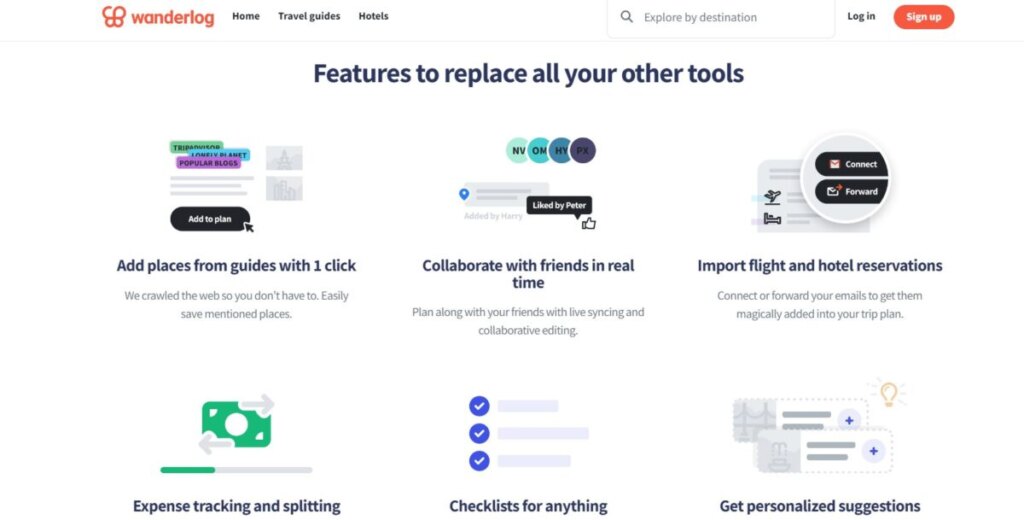
    Different Wanderlog Features
    Wanderlog / Wanderlog

    One of Wanderlog’s standout features is its intuitive interface for itinerary planning. It’s all about making travel easier. With Wanderlog’s drag-and-drop functionality, users can effortlessly create and customize multi-day itineraries. The interface is designed for flexibility and simplicity, allowing travelers to adjust their plans without hassle.

    Imagine you’re putting together a road trip with multiple stops and activities. You can simply drag and drop items to rearrange your schedule or add new places as you discover them. It’s like having a personal assistant right at your fingertips, helping you stay organized and efficient throughout your journey.

    Next up, let’s talk about mapping and route optimization. This feature is incredibly convenient for travelers who want to maximize their time and resources.

    Wanderlog provides interactive maps to visualize travel plans and optimize routes to ensure the most efficient path. This means that when users plan their trips, they can see a visual overview of their route and make adjustments as necessary based on their preferred stops and attractions.

    Think about it this way: You’re on a backpacking adventure through Europe and want to ensure you cover all the major landmarks efficiently within each city. With Wanderlog’s mapping and route optimization feature, you can chart your course to minimize backtracking and maximize your time exploring each destination.

    It’s like having a seasoned travel guide in your pocket, offering advice on navigating unfamiliar territories.

    It’s akin to having a GPS tailored specifically for maximizing your exploration while minimizing unnecessary detours.

    Lastly, another valuable feature offered by Wanderlog is expense tracking.

    Wanderlog allows users to track their travel expenses, which is crucial in budgeting for the trip. This helps travelers keep a close eye on their spending habits, especially when visiting new destinations with diverse spending patterns.

    Picture yourself enjoying the vibrant streets of Tokyo or strolling through the historical wonders of Rome. With so much to see and do, losing track of your expenses is easy. Using Wanderlog’s expense tracking feature, you can monitor your spending, allocate budgets for different categories such as accommodation, dining, and attractions, and maintain a clear overview of your travel financial outlay.

    These unique features are what make Wanderlog an exceptional companion for modern travelers who seek the perfect blend of organization, efficiency, and financial mindfulness during their adventures.

    Now, let’s turn our attention to exploring another contender in travel apps—unveiling Tripit’s distinct attributes.

    Unique Features of Tripit

    One of TripIt  Features
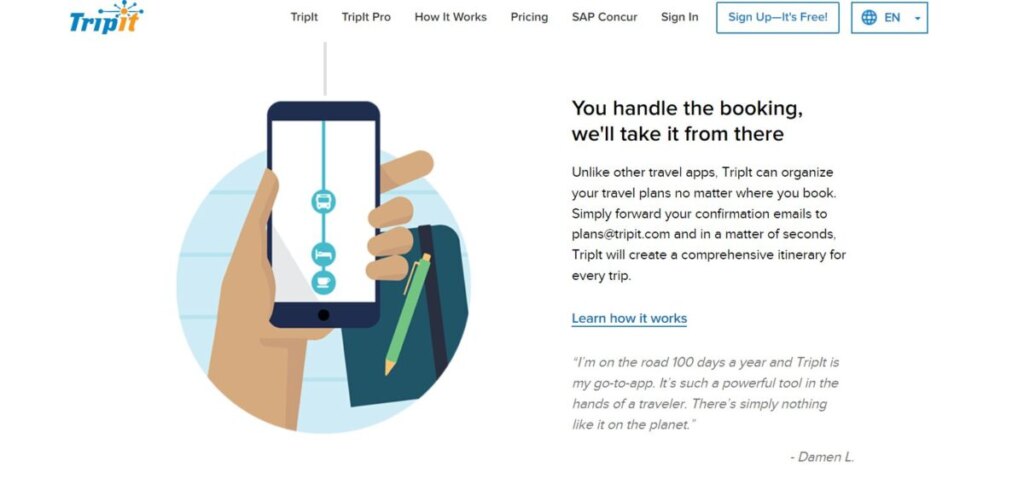
    TripIt / TripIt

    TripIt’s standout feature is its exceptional itinerary management, simplifying the often overwhelming task of organizing travel plans. By automatically creating a master itinerary from forwarded confirmation emails for flights, hotels, car rentals, and other bookings, the app consolidates all travel details in one convenient place.

    This eliminates the need to input travel information manually and ensures that travelers have easy access to all their essential trip details whenever and wherever they need them.

    Imagine receiving confirmations for flight reservations, hotel bookings, and car rentals, all scattered across different email threads. It’s easy to understand how things can get lost in the shuffle. However, with TripIt, these details are effortlessly compiled into a coherent itinerary. This seamless organization allows for stress-free travel planning and execution.

    The app’s real-time notification system is another standout feature that sets TripIt apart from other travel apps. These notifications inform travelers about flight delays, cancellations, or gate changes, allowing them to adapt their plans in real-time.

    This proactive approach to travel updates ensures that users have the most current information at their fingertips, helping them easily navigate unexpected changes and potential disruptions.

    Additionally, TripIt Pro provides alerts for crucial activities such as baggage claim details, alternate flight options in case of cancellations, and guidance on navigating through unfamiliar airports. This level of real-time support can be invaluable during hectic travel situations, turning potential chaos into manageable experiences.

    Traveling with friends, family, or colleagues? TripIt offers collaboration tools that enable seamless coordination during group travels. By sharing specific trip details and itineraries with selected contacts, travelers can ensure everyone is on the same page without constantly relaying information manually. This streamlined communication fosters efficient planning and minimizes misunderstandings, ultimately enhancing the overall travel experience for all involved.

    The ability to share detailed trip information with fellow travelers fosters coherence within group itineraries and promotes a sense of shared responsibility. Each member of the traveling party can contribute to planning and decision-making based on the collective insight provided by TripIt’s collaboration tools.

    As we’ve seen, TripIt offers various features that cater to every aspect of travel management—from seamless itinerary organization to real-time alerts and efficient group trip coordination. These unique features elevate TripIt as a comprehensive solution for travelers seeking convenience and peace of mind while on the go.

    See Related: The Ultimate Guide to Traveling on a Budget in the US

    Planner Capabilities: Notifications, Reservations, Mapping, and Scheduling

    Wanderlog vs TripIt Different App Features

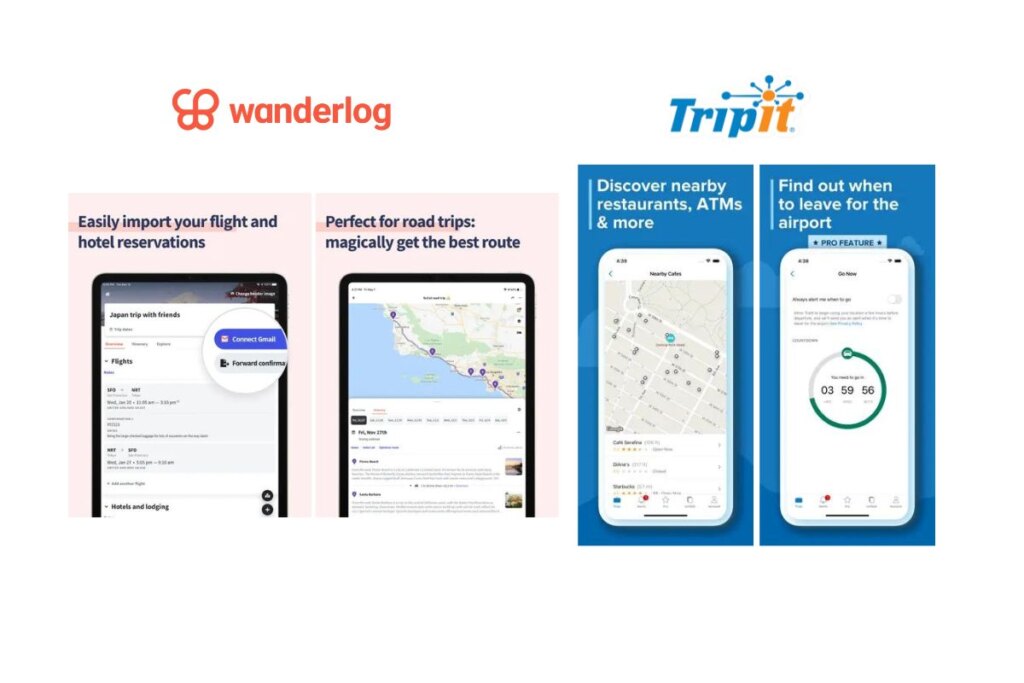
    When planning your travel, notifications are crucial in keeping you informed and prepared. Tripit prides itself on its notification system, which promptly notifies users of any travel plan changes. This feature can be a lifesaver when flights get delayed, or connections are missed. On the other hand, Wanderlog takes a different approach by providing personalized recommendations and notifications based on the user’s preferences and previously saved places. This can be particularly handy when you’re in a new city and want to explore local gems based on your interests.
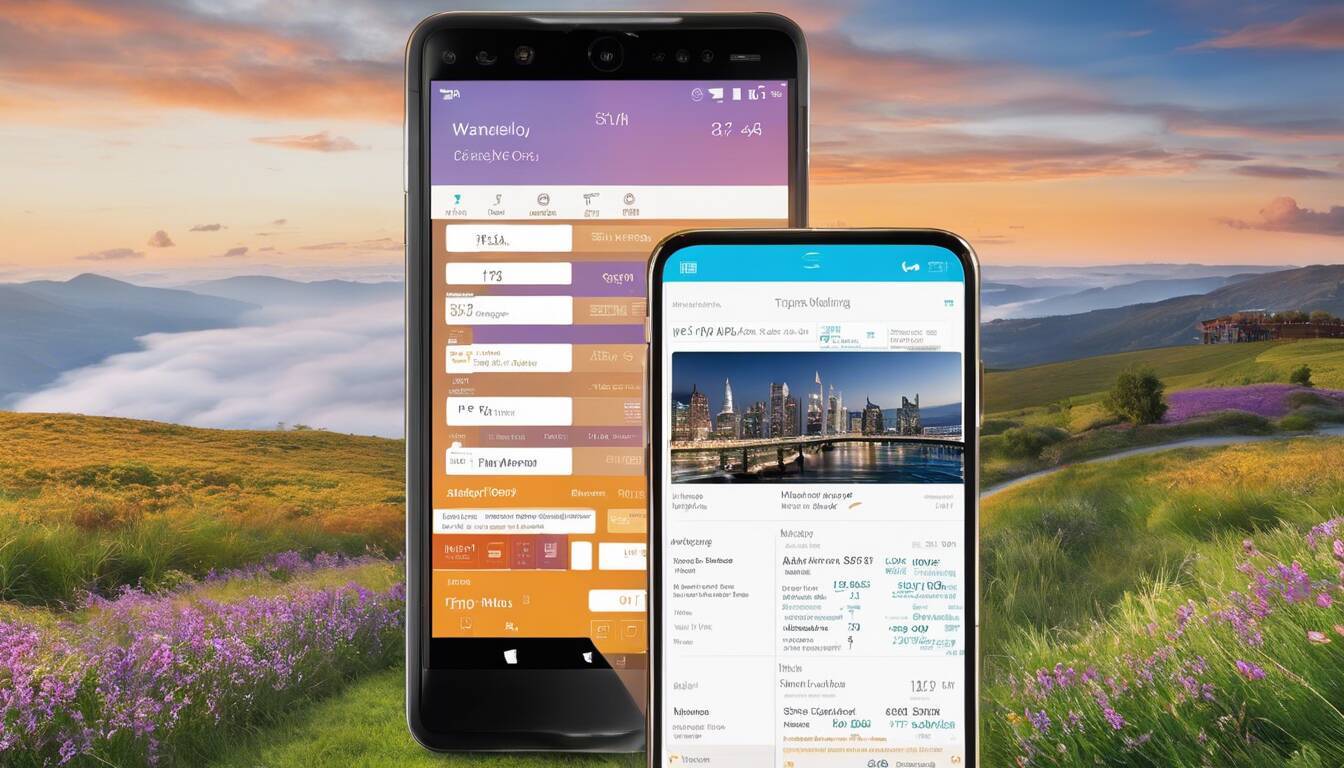
    Moving on to reservations, both Tripit and Wanderlog support travel reservations, but they differ in their approach. Tripit’s automatic itinerary compilation streamlines the process by gathering all your travel details into a cohesive and organized itinerary. This can be highly convenient for busy travelers juggling multiple trips. On the contrary, Wanderlog involves a more manual reservation input process. While this may offer users more control over their inputs, it may not be as efficient as Tripit’s automated itinerary creation.

    Let’s consider mapping and scheduling. Wanderlog excels in this area by allowing users to visualize their trip and adjust as needed. The ability to see your entire trip on a map can help you plan sightseeing routes and ensure efficient time management.

    On the other hand, Tripit focuses on precise scheduling management and alerts. It provides real-time updates on travel arrangements, ensuring that users stay informed about any changes or disruptions to their plans.

    In summary, while Tripit boasts an efficient notification system and streamlined reservation management, Wanderlog shines in mapping and scheduling capabilities, offering users greater flexibility and visualization of their travel plans. Both apps cater to different traveler preferences, so choosing the right one depends on your specific needs and priorities regarding trip planning.

    Now that we have a deeper understanding of how these apps handle various aspects of trip planning let’s compare their user interfaces and overall experience.

    User Interface and Experience Comparison

    wanderlog vs tripit

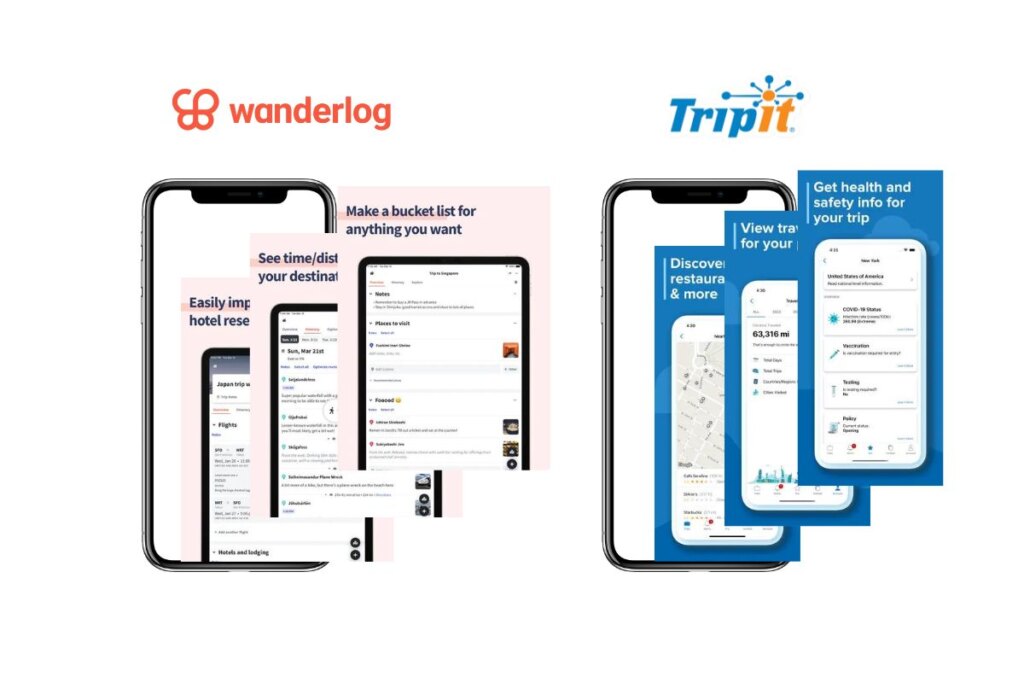
    An intuitive and engaging user interface can significantly influence the overall experience of travel apps. It’s not just about functionality; ease of use, aesthetics, and responsiveness are crucial in determining which app best suits your needs.

    Wanderlog stands out with a clear focus on simplicity and accessibility. The interface is designed to be visually appealing and user-friendly, ensuring users can easily navigate the planning process without feeling overwhelmed. The platform embraces a modern design aesthetic, prioritizing a clean, minimalistic layout that caters to users who prefer a streamlined planning experience.

    On the other hand, Tripit positions itself as a professional tool for organizing travel itineraries sleek and polishedly. Its interface exudes professionalism, catering to users who value an organized and automated approach to travel planning. While maintaining user-friendliness, Tripit emphasizes the creation of detailed itineraries, offering a seamless experience for users seeking a more business-like approach to trip organization.

    A key aspect of the UI/UX is responsiveness. Wanderlog ensures that the platform remains highly responsive, allowing users to effortlessly interact with the app across various devices. This level of responsiveness contributes to an enjoyable planning experience, enabling users to make quick adjustments or additions on the go.

    Tripit, synonymous with professional travel organizations, provides users with a consistent and reliable interface that streamlines itinerary creation while emphasizing the integration of travel-related notifications and updates. Its user-friendly approach comes with an added layer of sophistication, designed to offer corporate travelers an efficient travel planning journey that exudes professionalism.

    Some might argue in favor of text-heavy itineraries that exude professionalism, as in Tripit’s user interface. Others might lean towards Wanderlog’s visually appealing platform, which aims to provide a clutter-free and aesthetically pleasing planning experience where easily digestible information takes center stage.

    Both platforms present unique approaches to enhancing the user journey, catering to different preferences regarding trip organization—Wanderlog prioritizes simplicity and visual appeal. At the same time, Tripit focuses on creating professional-looking itineraries that emphasize automated organization.

    Now, let’s explore the performance and availability of these travel apps and their impact on seamless travel management.

    Platform Availability and Performance Comparison

    Wanderlog vs TripIt Platform

    When planning a trip, having easy access to your itinerary is crucial. Wanderlog and Tripit understand this, providing mobile apps for on-the-go planning and web-based platforms for detailed trip management from a desktop or laptop. This means you can plan and organize your trips, whether out and about or at home.

    Wanderlog takes pride in its seamless performance, ensuring users can access real-time updates and a responsive interface. As changes or additions are made to your trip, the platform keeps up with you, providing efficient planning without lags or delays. The emphasis on speed is particularly useful for travelers who must make quick decisions about their itinerary while moving.

    On the other hand, Tripit focuses more on reliability and stability. While being fast is important, Tripit prioritizes consistent performance, especially when dealing with extensive travel itineraries. The app prioritizes stability to ensure users can effectively manage complex travel details without encountering glitches or slowdowns.

    This distinction between Wanderlog’s emphasis on real-time updates and responsiveness and Tripit’s focus on consistent and stable performance significantly shapes the user experience. For example, a traveler needing to quickly adapt to changing flight schedules might find Wanderlog’s swift responsiveness invaluable, while another traveler managing a long and multi-faceted journey might place more value on Tripit’s assurance of robust performance throughout the entire planning process.

    It’s clear that both platforms cater to different performance priorities, offering distinct advantages based on travelers’ individual needs. Whether speed or stability is higher on your list of requirements, both Wanderlog and Tripit have tailored their platforms to meet these particular demands.

    Choosing between Wanderlog and Tripit ultimately depends on your travel needs and preferences. Their tailored features ensure travelers can find platforms that align with their unique priorities, making the trip planning and organization experience as smooth as possible.

  • Do You Need a Car in Durham? Here’s What to Know

    Do You Need a Car in Durham? Here’s What to Know

    Have you ever wondered how to navigate Durham’s charming streets and bustling surroundings without the hassle of a car? Our guide unlocks the secrets to experiencing Durham like a local, with insider tips on alternative modes of transportation that are efficient, eco-friendly, and easy on the wallet.

    (more…)
  • Cruise Alcohol Policy: What You Need to Know Before You Bring Your Own Booze

    Cruise Alcohol Policy: What You Need to Know Before You Bring Your Own Booze

    Ahoy, travelers and spirits enthusiasts! Ever imagined blending the pleasure of savoring your favorite liquor with the tranquility of the deep azure sea? Hold that thought because today, we’re diving into what you must know about cruise alcohol policies before popping a bottle in your cozy cabin. Navigating these waters can be tricky; unwinding with a drink shouldn’t come with an unexpected invoice or surprise guidelines for keeping your trip afloat. So anchor down as we spill the secrets on smartly equipping yourself with your preferred spirits without rocking the boat!

    (more…)
  • 10 Top Destinations in Southern Spain

    10 Top Destinations in Southern Spain

    Embarking on a journey through Andalusia opens up a tapestry woven from centuries of diverse cultural influences. Its borders hug most of southern Spain, providing a playground of varying landscapes, from the sparkling Mediterranean coastline to the mystical mountain ranges. Beneath the region’s sun, the warmest in Europe, you’ll uncover cities where each stone and corner has a tale to whisper, an echo of the Vandals’ ancient touch whose legacy lent the area its name.

    (more…)
  • Can You Bring Snacks on a Plane? Here’s What to Know

    Can You Bring Snacks on a Plane? Here’s What to Know

    Can you bring your favorite chocolate chip cookies on board? How about that gourmet cheese you just bought from the local market? Airport food regulations often seem like an enigma wrapped in a security check line.

    (more…)
  • Can You Bring Candles On A Plane? A Guide To TSA Regulations

    Can You Bring Candles On A Plane? A Guide To TSA Regulations

    Have you ever dreamt of unpacking a sweet-smelling bundle in your vacation villa, only to discover the delightful aroma of forbidden hand-poured candles? Perhaps you’ve found the perfect gift for a loved one during your travels but found yourself filled with dread thinking, does the TSA even allow this onboard?

    Explaining TSA regulations might seem as complicated as solving a Rubik’s cube blindfolded. Still, in this blog post, we will unlock the mystery of whether you can bring candles on a plane. So strap in, travelers; your turbulence-free journey through an essential facet of TSA regulations starts now… and yes, it promises to be illuminating!

    (more…)