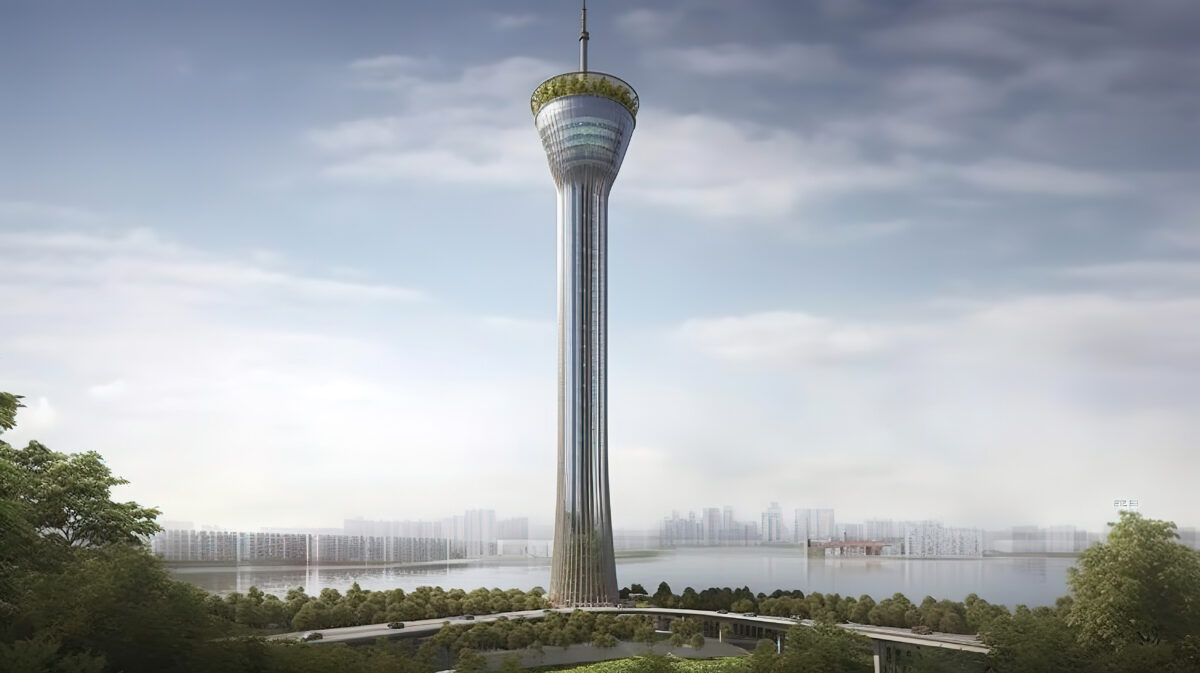
Huizhou is a coastal city in Guangdong province about 100 km (62 mi) northeast of Shenzhen, built around a lake and mountain that give it its character: Huizhou West Lake and Luofu Mountain. The best things to do in Huizhou mix that lake-and-mountain scenery in the city center with beaches and hot springs in Longmen and Huidong counties, an hour or two outside town. This guide covers 18 attractions inside Huizhou itself, plus 8 well-known sites in Shenzhen, Dongguan, and Hong Kong that some guides mislabel as being in Huizhou. If you are weighing other places to visit in China for the same trip, Huizhou pairs naturally with nearby Guangdong cities like Shantou and Jiangmen. We have kept those 8 here with honest distances, so you can plan a realistic multi-city trip instead of expecting a walk from your Huizhou hotel.
Quick answer: the best Huizhou attraction by category
| Category | Best pick | Where |
|---|---|---|
| Best lake and city views | Huizhou West Lake | Huicheng District, central Huizhou |
| Best mountain hike | Luofu Mountain | Boluo County, about 40 km northeast of the city center |
| Best beach | Shuangyue Bay | Huidong County, about 90 km southeast |
| Best hot spring | Cloud Nine Hot Spring | Longmen County, about 70 km north |
| Best history stop | Sizhou Pagoda | West Lake scenic area, central Huizhou |
| Best day trip from a nearby megacity | Kowloon Walled City Park | Hong Kong, about 150 km south (not in Huizhou) |
The sections below group attractions by what they are rather than a random countdown: lake, mountain, and coast first, then history and culture, then everyday city parks, and finally the honest “extra days” section covering the Shenzhen, Dongguan, and Hong Kong sites that keep getting attributed to Huizhou.
Lakes, mountains, and coastline around Huizhou
1. Huizhou West Lake

Huizhou West Lake is the city’s central scenic area: five connected lakes, six hills, and a scattering of pavilions, causeways, and pagodas around a shoreline of roughly 4.5 km. The lake got its name after the Song dynasty poet Su Dongpo, who lived in exile in Huizhou from 1094 to 1100, wrote that “only this West Lake rivals Hangzhou’s.” Walking the full loop takes about half a day; the paid boat crossing between Pinghu Gate and the Sizhou Pagoda cuts that in half if you are short on time. Entry to the lakeside park is free; some enclosed gardens charge a small admission.
2. Luofu Mountain

Luofu Mountain is one of Guangdong’s four sacred Taoist mountains and a national geopark, with more than 400 peaks and a summit, Feiyun Peak, that tops 1,296 meters. It is also where the Jin dynasty alchemist Ge Hong wrote much of his work on traditional Chinese medicine, and several of the mountain’s Taoist temples still trace their history to that period. Cable cars cover the steepest sections for visitors who do not want a full-day hike. It sits in Boluo County, about 40 km northeast of central Huizhou, and is easiest to reach by taxi, rideshare, or a direct tour bus from the city.
3. Nankun Mountain, Longmen County
Nankun Mountain sits in Longmen County, roughly 70 km north of central Huizhou, and is marketed locally as the “Green Land on the Tropic of Cancer” because the Tropic runs directly through the reserve. Its highest point, Tiantang Ding (Heaven’s Roof), rises above 1,000 meters and is one of the higher peaks in the Pearl River Delta region. The reserve is a mix of subtropical forest, waterfalls, and hiking trails, and it is usually paired with a soak at one of Longmen’s hot springs on the same day trip, since several resorts sit at the mountain’s base.
4. Cloud Nine Hot Spring, Longmen
Cloud Nine Hot Spring is a national 4A-rated resort in Maxing Village, Yonghan Town, Longmen County (address: Zenglong Road, Maxing Village, Yonghan Town, Longmen, Guangdong 516870), about 70 km north of central Huizhou. The spring water runs at roughly 70 degrees Celsius (158 degrees Fahrenheit) at the source and is classified as a silicon-fluoride mineral spring, rich in radon, calcium, magnesium, potassium, and sodium. The resort has 172 individual soaking pools, including 46 indoor pools, hydrotherapy pools, and a children’s pool zone. Book ahead on weekends and Chinese public holidays, when the resort is a popular day trip from both Huizhou and Guangzhou.
5. Xunliao Bay

Xunliao Bay is a stretch of coastline on Huizhou’s southern edge known for calmer water and finer sand than the more built-up Shenzhen beaches an hour away. It works well as a two- or three-night base: mid-range hotels here, including the Ibis Styles Huizhou Xunliao Bay, sit within walking distance of the water and are considerably cheaper than comparable Shenzhen or Hong Kong beach hotels. Expect a resort-town pace rather than a party scene; most visitors come for the beach, a seafood dinner, and an early night.
6. Shuangyue Bay

Shuangyue Bay (“Twin Moon Bay”) sits in Huidong County, about 90 km southeast of central Huizhou, and gets its name from two crescent-shaped coves separated by a headland. It is one of the cleaner swimming beaches within day-trip range of the city, and the “Lover’s Dyke,” a raised walkway connecting the two coves, has become a popular sunset spot in recent years. Public transport runs from Huizhou and Shenzhen on weekends; on weekdays a private car or rideshare is more reliable.
7. Sunrise Lover’s Bay, Huidong
Sunrise Lover’s Bay sits against Feifeng Mountain and faces the South China Sea, at Dongshan Sea Section, County Road 213, Huidong County, roughly 100 km southeast of central Huizhou. The scenic area combines a sand beach, rocky headlands nicknamed “Ox Horn Bay” and “Reef Bay,” and a bar built directly on the reef for sunset drinks. It is open from 8:00 a.m. to 10:30 p.m. (last entry 10:00 p.m.), with a ticket price of 38 yuan (roughly USD 5.30 / EUR 4.90 at 2026 exchange rates). It draws its name, and most of its visitors, from sunrise photography.
8. Gaobang Mountain

Gaobang Mountain rises above Honghua Lake on the northern edge of the city and is a quieter alternative to Luofu Mountain for a half-day hike, with fewer crowds and lower entry fees. The reservoir at its base reflects the ridgeline on calm mornings, which is when most local photographers show up. It is best reached by taxi or rideshare from central Huizhou, since public transit coverage in this area is limited.
History, culture, and landmarks in Huizhou
9. Sizhou Pagoda

Sizhou Pagoda is a seven-story brick pagoda on the shore of West Lake, first built in the Tang dynasty and rebuilt in its current form during the Song dynasty. At roughly 37 meters tall, it is one of the lake area’s most photographed landmarks and a useful landmark for orienting yourself around the West Lake loop. The interior stairs are open to climbers most days; check locally, since access can close for maintenance or holidays.
10. Yuan Miao Guan (West Lake’s Su Dongpo temple)
Yuan Miao Guan is a Taoist temple within the West Lake scenic area, built to honor the poet Su Dongpo, who spent six years of exile in Huizhou between 1094 and 1100 and became close with the local community. The nearby Dongpo Memorial Hall on Gu Hill displays his poetry and life story from that period, and the surrounding Dongpo Garden is planted with lychee trees, a nod to Su’s own writing about Huizhou’s lychees. It is a smaller, quieter stop than the main lake loop and worth 30 to 45 minutes if you are already walking the West Lake area.
11. Huizhou Science and Technology Museum

The Huizhou Science and Technology Museum (official site) is an interactive science museum aimed at families and school groups, with hands-on exhibits covering physics, space, and robotics rather than static displays. It is a practical option on a rainy day or with children in tow, and it sits close enough to central Huizhou to combine with a West Lake visit in the same afternoon.
12. Huicheng District Museum

Huicheng District Museum covers the city’s history from its founding as a prefecture seat through the Ming and Qing dynasties, with a focus on artifacts recovered from the old walled city and West Lake area. It is a smaller regional museum, so a visit usually runs an hour or less, which makes it easy to combine with the nearby Fucheng old-town relics on the same walk.
13. Huizhou Fucheng old-town relics
Huizhou’s old Fucheng, or prefecture city, was the walled administrative heart of Huizhou for centuries, and scattered relics, restored gates, and sections of the old street grid remain near the West Lake area. Documentation on exactly which structures are currently open to visitors versus preserved as archaeological sites is limited, so check with your hotel or a local guide before making it the centerpiece of a day; it is best treated as a bonus stop while you are already in the West Lake district rather than a dedicated destination.
14. Huize No.5 Bridge

Huize No.5 Bridge is a pedestrian bridge over one of Huizhou’s river channels, part of the Huize ancient town area on the city’s edge. It is a low-key stop, mostly useful as a photo point and a quiet place to watch the river traffic, rather than a full attraction in its own right. Pair it with a walk through the surrounding old-town streets if you have an extra hour.
Parks and everyday Huizhou
15. Huizhou Park

Huizhou Park is a public garden park on the edge of West Lake in Huicheng District (address: near 3CV3+275, Huizhoushangye Street, Huicheng District, Huizhou, postal code 516001). It is free to enter and popular with local residents for morning tai chi and evening walks, with pavilions and lakeside paths rather than the paid attractions found in the main West Lake scenic zone. It is a good low-key stop if you want to see how Huizhou residents actually use the lakefront, rather than the more touristed sections nearby.
16. Huizhou’s pedestrian shopping street
Central Huizhou has a pedestrianized shopping district near the old town, closed to cars and lined with local shops, street food stalls, and a handful of chain retailers. It is not a formal tourist attraction so much as a place to see everyday city life, grab a cheap dinner, and pick up snacks before heading back to your hotel. Evenings are busiest, when the food stalls open and the street fills up after the workday.
17. Changlingtou Village Park
Changlingtou Village Park is a smaller neighborhood park on Huizhou’s outskirts, mixing green space with village-style architecture. It sees far fewer visitors than the West Lake area and is a reasonable stop if you are staying nearby or want a break from the more crowded central attractions, but it is not worth a special trip on its own. Local signage is limited, so a rideshare or taxi with the address saved is the most reliable way to get there.
18. Guohuayuan (Guo family garden)
Guohuayuan is a smaller heritage garden in the Huicheng area, in the tradition of Lingnan-style courtyard gardens found throughout Guangdong. Detailed visitor information, including current opening hours, is limited in English-language sources, so confirm access with your hotel or a local guide before visiting. It is best treated as a short add-on to a West Lake day rather than a standalone destination.
Extra days? Real places within reach of Huizhou (not in Huizhou)
The eight attractions below are genuinely worth visiting, and they are genuinely not in Huizhou. They sit in Shenzhen, Dongguan, and Hong Kong, all within striking distance if you are building a multi-city Guangdong or Greater Bay Area itinerary and have an extra day or two. For more options once you are outside Huizhou, see our roundup of the best cities in China to visit. We are including them here, with distances, because they show up attributed to Huizhou in enough travel content that visitors plan around them expecting a short local trip. Budget a half or full day, plus transit, for any of these from a Huizhou base.
19. Keyuan Garden, Dongguan
Keyuan is a Qing dynasty scholar’s garden in Dongguan, about 90 km southwest of Huizhou, and one of Guangdong’s four classical “Lingnan gardens.” Built in the mid-1800s, it combines residential courtyards with landscaped water features in a compact footprint, and it is a genuinely worthwhile cultural stop, just not a Huizhou attraction. Plan on roughly two hours by car or high-speed rail connection through Dongguan.
20. Lizhi Park, Shenzhen

Lizhi Park is a large public park in central Shenzhen, about 100 km southwest of Huizhou, known for its lychee orchards, lake, and evening crowds once the temperature drops. It is free to enter and busiest after sunset, when locals come out for walks, group dancing, and street food nearby. Reaching it from Huizhou takes roughly 1.5 to 2 hours by car or intercity coach.
21. Lianhuashan Park, Shenzhen

Lianhuashan Park, or Lotus Hill Park, sits in Shenzhen’s Futian District, about 100 km southwest of Huizhou, and is best known for its hilltop statue of Deng Xiaoping and sweeping views over Shenzhen’s downtown skyline. It is a popular kite-flying spot on weekends and free to enter. Combine it with a stop at Lizhi Park, since both are in central Shenzhen and roughly 20 minutes apart by taxi.
22. Kowloon Walled City Park, Hong Kong

Kowloon Walled City Park occupies the former site of the Kowloon Walled City, a densely packed, largely ungoverned settlement demolished in 1993 and replaced with a landscaped Qing dynasty-style garden. It is in Kowloon, Hong Kong, roughly 150 km (95 mi) south of central Huizhou, a border crossing and multi-hour trip away, not a local Huizhou stop. Entry is free, and the small on-site exhibition hall covers the walled city’s history for visitors unfamiliar with it.
23. Huaqiaocheng (OCT), Shenzhen

Huaqiaocheng, usually shortened to OCT, is a large mixed-use cultural and entertainment district in Shenzhen’s Nanshan District, about 110 km southwest of Huizhou. It includes museums, theme parks, an art district, and the Eastern Huaqiaocheng Tea Valley hiking trails, and it easily fills a full day on its own. It is a Shenzhen neighborhood, not a Huizhou site, and is best planned as part of a dedicated Shenzhen leg of your trip.
24. Chiwan Tianhou Temple and Museum, Shenzhen

The Chiwan Tianhou Temple and Museum sits in Shenzhen’s Nanshan District, about 110 km southwest of Huizhou, and is dedicated to Mazu, the sea goddess still honored across coastal southern China and Taiwan. It is one of the larger Tianhou temples in the Pearl River Delta, with exhibits on maritime trade history alongside the working shrine. It is a Shenzhen attraction, not a Huizhou one.
25. OCT East Water Park, Shenzhen

OCT East Water Park is part of the larger OCT East resort in Shenzhen’s Yantian District, about 120 km southwest of Huizhou, and is a good option with kids if you are already spending a day in Shenzhen. It combines water slides with alpine-themed rides and gardens across a hillside site. Like the rest of the OCT sites on this list, plan a dedicated Shenzhen day for it rather than a Huizhou side trip.
26. Hong Kong Disneyland

Hong Kong Disneyland is on Lantau Island, Hong Kong, roughly 150 to 170 km south of central Huizhou depending on route, and requires a border crossing plus several hours of travel each way. It is the smallest of the global Disney parks but still a full-day commitment. If you are treating Huizhou as a base for a longer Guangdong-Hong Kong trip, plan Disneyland as its own overnight or full-day excursion rather than a same-day trip from Huizhou.
Frequently asked questions about Huizhou
Is Kowloon Walled City Park actually in Huizhou?
No. Kowloon Walled City Park is in Kowloon, Hong Kong, about 150 km (95 mi) south of central Huizhou. It requires an international border crossing and is not a same-day trip from a Huizhou hotel.
How far is Shenzhen from Huizhou?
Central Shenzhen is roughly 100 to 120 km from central Huizhou, depending on which district you are heading to, and takes about 1.5 to 2 hours by car or intercity coach.
What is Huizhou best known for?
Huizhou is best known for Huizhou West Lake, tied to the exiled Song dynasty poet Su Dongpo, and for Luofu Mountain, one of Guangdong’s four sacred Taoist mountains. Beach towns like Xunliao Bay and Shuangyue Bay, and the hot springs around Longmen County, round out the city’s main draws.
Are there hot springs near Huizhou?
Yes. Longmen County, about 70 km north of central Huizhou, has several hot spring resorts, including Cloud Nine Hot Spring near the base of Nankun Mountain.
Sources and methodology
Distances and facts in this guide were checked in August 2026 against Trip.com destination and attraction pages, TripAdvisor listings, Wikipedia entries for Huizhou, Huicheng, and the individual attractions, and English-language coverage of Nankun Mountain, Longmen’s hot spring resorts, and Sunrise Lover’s Bay. Distances are approximate road distances between city or district centers and will vary with your exact starting point and route.
Editor’s note: This guide previously mislabeled several attractions in Shenzhen, Dongguan, and Hong Kong as being located in Huizhou, and included a few thinly documented listings we could not verify. We have corrected the locations, added real distances, and replaced the unverifiable entries with confirmed attractions. Last updated August 2026.
Disclosure: This article contains affiliate links to TripAdvisor and Trip.com. If you book through these links, we may earn a small commission at no extra cost to you.